Watch a seasoned frowner stop making the same expression for two years, and you’ll notice something subtle. The forehead doesn’t just look smoother, it moves differently. The corrugators soften, the frontalis relaxes faster, and the brow rests in a calmer position. This is not only chemodenervation at work. Over repeat sessions, Botox can create selective muscle atrophy and retraining, which is both the strategy and the tightrope. When planned well, long-term relaxation reduces wrinkle depth, stabilizes asymmetries, and extends the interval between treatments. When mismanaged, it can thin the wrong muscle, steal support from brows or cheeks, and set up compensation patterns that are harder to control later.
I’ve treated patients who metabolize neurotoxin in eight weeks and others who hold a result for seven months, even in high-movement zones. I’ve also repaired outcomes when heavy hands or poor mapping caused drooping brows, peaked arches, or flat cheeks after overrelaxing the zygomaticus. The through line is this: muscle behavior and structure change over time. You need a plan that anticipates those changes, not just a map for today.
How Atrophy Happens With Repeat Botox
Botox blocks acetylcholine at the neuromuscular junction, so treated fibers stop firing until new synaptic connections bud. During that period, the muscle atrophies from disuse, particularly in fast-twitch, high-activity fibers. Early cycles feel like an on-off switch. Later cycles feel like “less muscle to turn back on.” That’s the benefit you can bank on if you sequence treatments well. It can also become the risk when support muscles that hold brows, lips, or eyelids in position weaken.
Atrophy builds directionally. Over time, dominant vectors calm first. A strong depressor, such as the corrugator or DAO, will thin, and the opposing elevator (frontalis or zygomaticus) can act more freely. This is how you get a light, stable brow lift and softer marionette pull without needing more units each visit. But if you relax elevators too aggressively, the face loses its suspensory tone and settles.
Metabolism, exercise intensity, and baseline muscle mass shape this trajectory. Endurance athletes and very expressive personalities typically burn through effect faster, especially in the upper face. Thick masseter muscles resist early atrophy, then shrink in a stepwise manner once you cross a threshold of consistent dosing. These patterns matter because they inform unit mapping, dilution, and touch-up timing in later years.
Choosing Targets That Age Well
If long-term atrophy is a tool, choose muscles where shrinkage supports aging patterns. Depressors that etch lines and drag tissue downward are reliable targets. Elevators that hold shape and open the face need more caution.
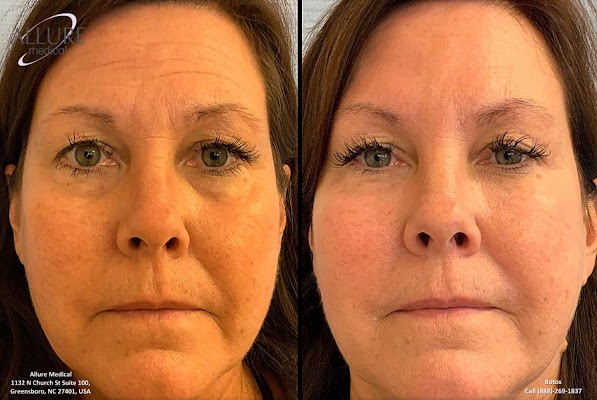
The glabellar complex is a workhorse example. Corrugators and procerus carve the 11s and aim the brows medially and down. Regular treatment reduces the angry scowl habit, thins these fibers, and gives a quiet medial brow lift without flattening the forehead. By contrast, the frontalis elevates the brows and shapes expression. Over-treating the lower third of frontalis for years will de-train the only elevator you have, leaving the brow reliant on skin and fat pad support. Patients then report heavy lids and a shelf-like look when they try to smile. The solution is precision in the frontalis map and restraint in cumulative dosing.
Around the eyes, lateral orbicularis oculi relaxes crow’s feet beautifully. Yet it also helps support the lateral canthus and contributes to cheek lift during a smile. Too much over time can flatten the malar crescent. A measured lateral pattern, a superficial injection plane, and attention to cheek movement during mapping maintain texture gains without erasing warmth in the expression.
In the lower face, the DAO and mentalis respond well to strategic atrophy. A consistent microdose into DAO softens the downturned corners and eases marionette lines. For the chin, reducing mentalis hyperactivity smooths dimpling and orange-peel texture, especially in thin skin. Long-term, the lower face looks lighter and less pursed if you let elevators like the zygomaticus and levator labii do their job.
Unit Mapping, Depth, and Diffusion Control
When you plan for longevity, you control diffusion first. The forehead and periorbital area sit millimeters from structures you cannot afford to weaken. Use the smallest effective volume, place units with a perpendicular 30-gauge needle, and keep intradermal blebs for microdosing only when the goal is skin texture rather than muscle action.
Glabella: a five-point map remains the most dependable scaffold, but the dose should follow muscle strength testing. Palpate corrugator bulk during frown, mark the tail’s lateral extent, and avoid track-marking too close to the orbital rim. For strong corrugators, 18 to 25 units total is common. For smaller frames or first-time patients, 12 to 16 units often suffices. A shallow-to-mid depth into corrugator, slightly deeper for procerus, helps anchor the outcome.
Frontalis: dose to the movement pattern, not the template. Heavy central lines with weak lateral pull need central dosing that stops at least 1.5 to 2 centimeters above the brow to protect lift. If lateral brow elevation is dominant, avoid chasing every line, and place lighter microcolumns across the upper third. Many practitioners map 8 to 14 units for fine, long foreheads and 14 to 22 for stronger, wider foreheads, with intentional gaps above the brow to maintain elevator tone.
Crow’s feet: keep lateral to the orbital rim by at least 1 centimeter. Use superficial subdermal placement to avoid deep spread into zygomaticus complex. Typical dosing ranges from 6 to 12 units per side, adjusted to smile pattern. For those who recruit cheek elevators heavily, stay toward the posterior-lateral fan to avoid cheek flattening.
Masseter: bruxism and jaw contouring require depth and spread control. Insert with a 30-gauge, perpendicular to the angle of the mandible into the middle third of the muscle belly, two to three injection columns per side. Start at 20 to 30 units per side in first-time patients, then titrate up to 30 to 50 if clenching persists. Precision mapping using facial animation analysis helps separate masseter from neighboring risorius to avoid smile asymmetry.
Mentalis and DAO: mentalis often responds to 4 to 8 units total in two small columns, placed just superior to the bony pogonion, with depth set at mid-muscle. DAO dosing is weight- and strength-dependent, often 2 to 4 units per side, hugging the lateral depressor band but staying lateral to the marionette line to protect the depressor labii.
" width="560" height="315" style="border: none;" allowfullscreen="" >
Platysmal bands: treat distinct vertical bands with small aliquots along the band length, keeping the dose conservative if the neck is thin. Typical totals range from 20 to 50 units for early bands. Too much diffusion can weaken swallowing muscles or create neck heaviness.
Dilution Ratios, Storage, and Onset
Dilution changes spread predictably. Higher dilution increases diffusion radius for a given unit count, useful when you want a feathered transition in large flat muscles like frontalis. Tighter dilution constrains spread for small targets near sensitive structures. Whichever you choose, keep it consistent within a session so each unit behaves the same way in your hands.
Temperature control matters more than most think. Vials should remain refrigerated according to label specifications, and reconstituted toxin kept in the recommended range. Potency declines with time, light, and repeated temperature fluctuations. I’ve seen faster fade in practices that leave reconstituted vials riding the line on storage. If a patient reports unusually short duration and your technique is sound, check storage logs before you change their dose.
Onset varies by area. Glabella and crow’s feet often feel tighter at day 3 to 4, frontalis around day 5 to 7, masseter function declines more gradually over 1 to 2 weeks. Patients with high muscle mass or fast metabolism sometimes notice a softer onset and earlier fade, which calls for tight follow-up and adaptation strategies.
Preventative Use and Microdosing
Preventative protocols work best in high-movement zones before etched lines become structural. The idea is to reduce peak contraction without deleting everyday expression. Microdosing achieves that balance. For a first-time 28-year-old who is expressive and beginning to etch 11s and horizontal lines, you can microdose the glabella and upper third of frontalis with small columns, then reassess in eight to ten weeks. Over a year, their movement pattern changes, and lines that would have become permanent stay shallow.
Microdosing is also useful around the perioral region. Feathering 1 to 2 units into perioral orbicularis improves fine lines without affecting speech if you stay superficial and respect the vertical filter columns. The lip flip is a separate maneuver: tiny aliquots at the vermilion border for eversion, best for candidates with tight upper lips rather than volume deficiency. The limitation is durability. The lip flip fades quickly and should not replace filler when structure is the issue.
Male Patterns, Muscle Dominance, and Asymmetry
Male frontalis tends to be broader, with lines that run higher and deeper at baseline. Unit mapping for forehead and glabellar lines often requires more units and higher placement to preserve a flat or slightly arched brow without a feminine peak. Avoid over-relaxing the lateral tail of frontalis. Men with hyperactive corrugators benefit from firmer dosing medially, but glabellar depth must be controlled to protect the levator palpebrae and avoid lid ptosis.
Muscle dominance creates predictable asymmetries. A stronger left corrugator pulls the left brow medially and down, while a dominant right frontalis elevates the right brow. Fixing this long-term means slightly higher dosing on the dominant depressor and lighter dosing on the dominant elevator, repeated consistently, so the atrophy accumulates in the right places. The same principle applies to eyebrow asymmetry from a hyperactive lateral frontalis tail or to a gummy smile from an overactive levator labii superioris alaeque nasi. Targeted dosing retrains, then repeated sessions let selective atrophy hold the correction between visits.
Safety Near the Eyes, Nose, and Vascular Corridors
Around the orbital and periorbital area, generous margins are the rule. Eyelid ptosis results from spread into the levator palpebrae superioris, which sits medially and deep. Stay superficial and at least a centimeter lateral to the bony rim for crow’s feet, and avoid low frontalis injections close to the brow. For bunny lines, keep to the mid-nasal lateral wall, superficial, and conservative. Over-relaxation here can look odd during smiling, and diffusion toward the levator labii can worsen a gummy smile or create speech asymmetries.
Vascular safety is less about intravascular risk with toxin and more about bruising and tracking. Use fine needles, slow injections, and point pressure for hemostasis. In thin skin, lower volume and fewer passes reduce the risk of shine-through blebs and edema. If post-injection swelling occurs, mild lymphatic congestion can exaggerate asymmetry for several days. Reassure, avoid early touch-up, and evaluate at two weeks.
Durability, Exercise, and Muscle Fiber Type
Duration is a moving target. The same dose in the same patient can last 10 weeks one cycle and 16 the next. Variables include exercise intensity, overall metabolism, and fiber composition. Fast-twitch dominant muscles lose strength faster and recover faster. Heavy cardio or high-heat workouts immediately post-treatment do not inactivate toxin, but they can increase early perfusion and possibly affect diffusion. I advise avoiding strenuous exercise for the first day as a practical hedge.
Across facial regions, the glabella often outlasts frontalis by a few weeks. Crow’s feet can sit in the middle, depending View website on smile behavior. The masseter shows a delayed onset and longer plateau, especially after the second or third cycle. That is when patients begin to notice slimmer jawlines from true hypertrophy reduction, not just temporary relaxation.
Touch-Ups, Intervals, and Avoiding Resistance
I structure follow-up at two weeks for first-time areas. The early aim is symmetry and function. Touch-ups are conservative, usually one to four units per area. Over months, once mapping feels stable, I push intervals out. Many patients hold upper face results 12 to 16 weeks. With patterned atrophy, you can sometimes stretch to five or six months in low-demand zones like the glabella, while frontalis remains on a three to four month cadence.
Resistance to Botox is uncommon but real. It presents as blunted effect despite appropriate dosing and technique, sometimes after years of exposure. Causes include antibody formation, higher cumulative dosing, frequent booster injections, and product switching within short windows. If you suspect resistance, stop boosters, lengthen intervals, and consider moving to another neuromodulator with different accessory proteins. Reconfirm storage and dilution practices first, because “resistance” is often technique or potency degradation masquerading as biology.
Planning for Expressive Personalities
Some faces are low-motion. Others speak before the mouth opens. Expressive patients need nuanced plans: microdosing where expression defines identity and full dosing where lines carve years. They also need counseling on what will change in their emotional feedback loop. When frown strength decreases, the brain gets less facial feedback about frustration. People sometimes report feeling less tense and less likely to scowl. That can be a benefit for those with hyperactive facial expressions and muscle dominance, but it should be a deliberate choice, not a surprise.
Skin Texture, Oil, and Collagen Over Time
Botox’s effect is muscular, but repeat sessions can change the skin overlying those muscles. Less mechanical stress equals finer texture in dynamic zones. Some patients note reduced sebum and smaller-looking pores in the forehead after several cycles. It is not a universal outcome, and it varies by skin type. There is also interesting clinical observation that skin looks “thicker” or better hydrated over time when dynamic creasing is reduced. That may come from better barrier integrity and less transepidermal water loss rather than direct collagen stimulation.
When etched lines persist at rest, fillers, energy devices, or microneedling join the plan. Botox reduces the engine of the wrinkle. Filler or biostimulatory treatments handle the track that remains. Combining modalities prevents over-reliance on toxin and, by extension, reduces the risk of over-atrophy in support muscles.
Complications, Reversal Strategies, and Risk Management
Even with meticulous maps, complications happen. Brow ptosis from low frontalis injections responds to time and, in some cases, tiny doses to the lateral tail of frontalis to rebalance, though you risk more heaviness. Eyelid ptosis from levator diffusion has limited options. Apraclonidine drops can lift the lid a millimeter or two by stimulating Mullers muscle, which buys comfort while the effect wears off. Smile asymmetry after perioral spread needs patience; avoid chasing with more toxin unless you can identify a clear opposing vector that will restore balance.
The best mitigation is prevention. Respect safety margins near the orbital structures, keep doses modest in thin skin, and err on the side of under-correcting first. If an area carries outsized risk for a patient’s function or identity, such as singers and perioral control, consider avoiding it or using extremely low microdoses with clear informed consent.
Bruxism, Jaw Slimming, and Facial Harmony
For bruxism, heavier dosing is not always better. The goal is symptom relief without chewing fatigue. Start with 20 to 30 units per side, reassess at six weeks, and climb in 5 to 10 unit increments only if clenching persists. For facial contouring, the aesthetic endpoint is a narrower lower face that still supports midface curves. Long-term atrophy of the masseter combined with a slight drop in parotid fullness can sharpen the jaw too much in already thin faces. Plan ahead. If the lower face narrows, you may later need filler along the gonial angle or mandibular body to maintain balance.
When jaw slimming is the primary goal, warn about temporary chewing weakness and potential smile changes for the first few weeks. Mapping should avoid diffusion to risorius. Use palpation during clench and smile to confirm borders, and position injections in the muscle belly’s middle and posterior sections for a safer spread pattern.
Migraines, Sweating, and Practical Variations
Chronic migraine protocols are different in dose, distribution, and expectation. You work across scalp, temples, back of the head, and neck in a grid guided by pain mapping. The forehead doses can interplay with aesthetics, so coordinate between therapeutic and cosmetic plans to avoid over-weakening key elevators.
For excessive sweating, higher unit totals spread across the axilla, palms, or scalp suppress gland activity for months. Aesthetic spillover is minimal in axillae, but scalp treatments can subtly change hair styling and volume perception. Plan session timing and counsel about onset lag.
Forehead Prevention Versus Correction
Preventing forehead lines asks for sparse, high placement that keeps most of the frontalis active. Correcting established etching needs more units and a wider grid, but you still must leave zones of function. If you blanket the forehead to chase every line, short-term smoothness comes at the cost of long-term support. Patients with thin skin and low elasticity are particularly vulnerable to telltale flatness. Accept a small residual movement and a few shallow lines rather than building reliance on toxin to hold the brows open.
Sequencing Multi-Area Treatments
Sequencing affects outcomes. Start with the strongest depressors in a first visit. Let those relax, then fine-tune elevators. In one session, it can mean treating glabella and DAO first, then adjusting frontalis and periorbital areas with smaller aliquots. Across cycles, you slowly increase atrophy where you want lift and botox NC keep elevators spry. This approach extends intervals and reduces the need for high frontalis dosing that courts brow heaviness.
First-Time Versus Repeat Patients
First-time dosing leans conservative. You learn the face’s compensation patterns. Repeat patients allow bolder, targeted plans. As atrophy accumulates, reduce units in muscles that have reached the goal and maintain or slightly increase where compensation has crept in. For example, a patient whose corrugators are now quiet might need fewer glabellar units but a touch more in the lateral orbicularis to match their evolved smile dynamics.
When Not to Treat
Contraindications include active infections in the treatment area, pregnancy, certain neuromuscular disorders such as myasthenia gravis, and known hypersensitivity to components. Be cautious with patients who rely on precise perioral function for profession or with those who have a history of eyelid ptosis after minimal dosing. For thin skin with visible vasculature, prioritize superficial, low-volume injections and avoid areas where even slight heaviness would be noticeable. Some asymmetries are structural rather than muscular. When bone or dental occlusion drives the imbalance, toxin will only mask, not correct.
The Long View: Facial Retraining and Harmony
Over years, Botox becomes less about freezing and more about editing. You retrain muscles to move in directions that flatter the patient’s features and identity. You create space for healthy expression and clip only the reactions that carve lines or drag tissue downward. The finest outcomes show balanced brows that lift without peaking, eyes that smile without flattening the cheek, and a lower face that rests without a scowl.
Realistic pacing matters. Expect two to three cycles to establish a stable map, then adjust every six to twelve months as aging, weight change, and lifestyle shift the terrain. Keep meticulous notes on unit placement, depth, dilution, and patient feedback. Photograph expressions before and after. Small, consistent changes build the long-term benefit: selective atrophy where it helps, preserved strength where it protects, and an aging pattern that looks unhurried.
A compact checklist for safer, longer-lasting results
- Map to movement, not lines, and reassess at two weeks before touching up. Favor depressors for long-term atrophy; preserve enough elevator function to maintain support. Control diffusion with depth, volume, and spacing, especially near the orbital rim and perioral region. Stretch intervals gradually as selective atrophy stabilizes results, and avoid frequent boosters. Document unit maps and patient-specific responses to build a durable plan over years.
A note on conversions and product choices
If you switch between brands, mind unit conversion accuracy. Clinical effect equivalence varies by formulation and protein complex. Most practices “calibrate” by experience rather than a strict mathematical ratio. Keep a consistent product per patient when possible to reduce variability, particularly when you are fine-tuning microdoses for subtle aesthetic changes.
Final judgment on atrophy as a tool
Atrophy is neither the enemy nor the entire point. It is the consequence of repeated, well-placed treatments, and it can be leveraged to ease dynamic lines, reduce unwanted dominance, and lengthen intervals. The risk is hollowing the very muscles that hold lift and personality. The craft lies in knowing which fibers to quiet and which to protect year after year, how to adjust for metabolism and muscle strength, and when to layer in other therapies so Botox does not do a job it was never meant to do alone. When you respect those boundaries, the long-term curve bends toward a face that ages with control instead of constraint.